Cutting tools: "Industrial teeth", important consumables widely used in manufacturing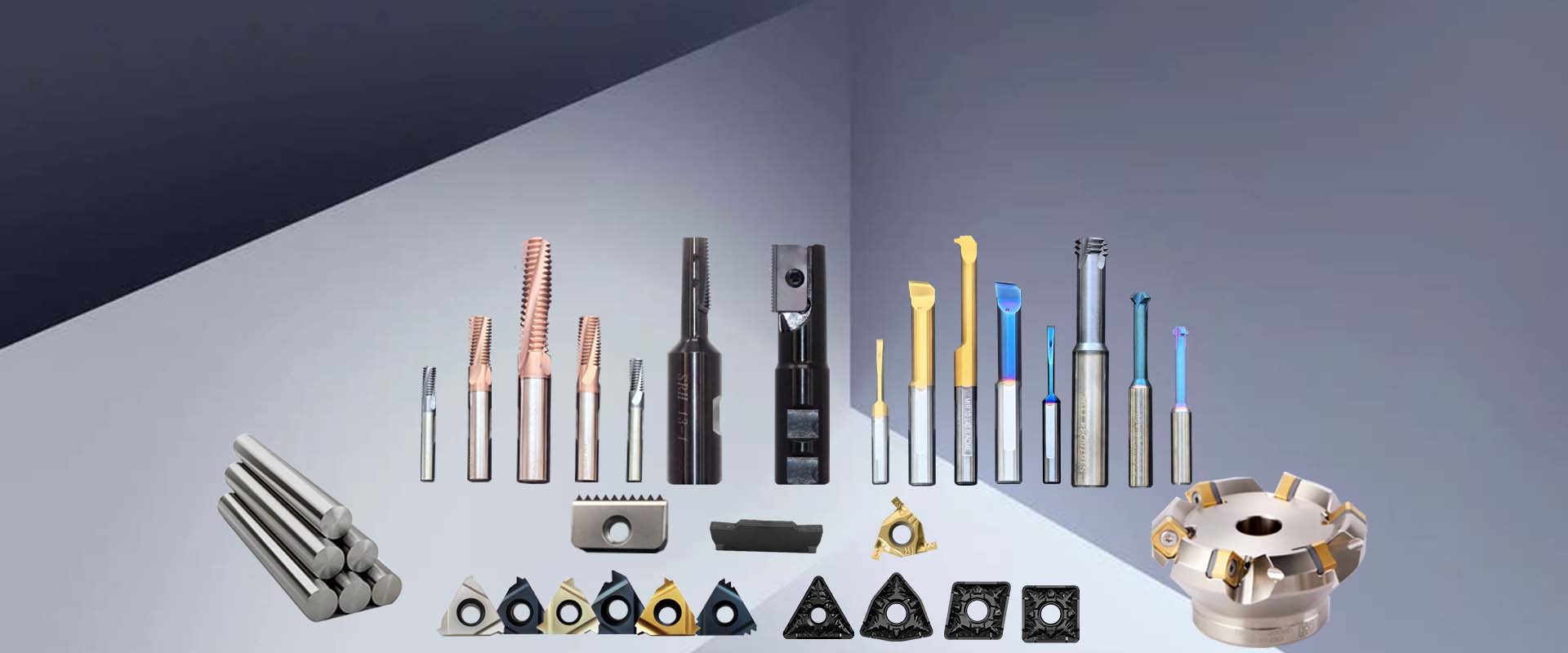
1.1 Industrial chain: upstream is metal materials, downstream is major manufacturing industries
Cutting accounts for about 90% of machining workload, and cutting tools are the "teeth" of industrial machine tools, which directly affects the processing level of the manufacturing industry. Cutting refers to the mechanical processing method of cutting excess materials from the surface of the workpiece to ensure that the geometric shape, dimensional accuracy, surface quality and other aspects of the workpiece meet the design requirements, accounting for about 90% of the entire machining workload. Cutting is usually achieved by cutting machine tools, and cutting tools are key consumables. As the "teeth" of industrial machine tools, their quality directly affects the process level, production efficiency and product quality of the machinery manufacturing industry. The upstream of cutting tools is the supplier of raw materials, and the downstream is used in major manufacturing industries. Taking the most mainstream carbide cutting tools as an example, they can be divided into: steel, stainless steel, cast iron, non-ferrous metals, heat-resistant alloys, hardened steel, etc. according to the processed materials. The upstream is the manufacturer of the corresponding raw materials (tungsten carbide, cobalt powder, tantalum-niobium solid solution, etc.), and representative companies include China Tungsten High-tech, Xiamen Tungsten Industry, etc. Downstream application areas are concentrated in the manufacturing industry, mainly used in automobiles and motorcycles, machine tools, general machinery, molds, engineering machinery and other fields. Aerospace, military industry, medical machinery and other fields also provide a broader space for technical application and transformation of cemented carbide tools.
Among the upstream raw materials, the main raw material of cemented carbide tools is tungsten carbide, which accounts for more than 50% of the direct material cost. Taking the cost structure of Huarui Precision CNC Carbide Blades as an example, the production cost can be divided into direct materials, direct labor and manufacturing expenses, accounting for 45.1%, 9.5% and 45.4% respectively. Among them, direct materials are divided into raw materials (tungsten carbide powder, cobalt powder, tantalum niobium solid solution) and auxiliary materials. Raw materials account for as high as 69.7%, of which tungsten carbide powder, cobalt powder, tantalum niobium solid solution and other metal powders account for 52.72%, 7.39%, 5.97% and 3.58% respectively. The remaining auxiliary materials accounted for 30.34%, among which coating auxiliary spare parts, matching tool bars and tool discs, and grinding materials accounted for the highest proportions, at 4.98%, 4.42%, and 4.03%, respectively.
my country has abundant reserves of tungsten carbide and cobalt powders and sufficient supply. The raw materials of cemented carbide tools are mainly tungsten carbide powder and cobalt powder. Tungsten carbide powder accounts for more than 75% of the raw material cost (if calculated by mass, its usage accounts for more than 85%), and cobalt powder accounts for about 10%. According to data from the China Tungsten Industry Association, cemented carbide tools accounted for 50% of China's total tungsten consumption in 2020. my country's tungsten resources account for about 60% of the world's reserves, and its production and sales volume has always ranked first in the world. my country's cobalt smelting technology is also at the world's leading level, and it is the world's largest supplier of refined cobalt. my country has abundant tungsten resources and strong refined cobalt supply capacity, which can ensure the normal supply of the main raw materials of cemented carbide.
Cutting tools have a wide range of downstream application scenarios, and demand is expected to continue to grow. According to the fourth cutting tool user survey and analysis report, cutting tools are widely used in automobiles and motorcycles, machine tools, general machinery, molds, engineering machinery, and aerospace, accounting for 20.9%, 18.1%, 15.0%, 7.4%, 6.8%, and 6.3% in 2018 respectively. Downstream applications are extensive and the fields are relatively scattered, and the alternating demand has smoothed the industry cycle. In recent years, the processing demand in the fields of new energy vehicles, medical equipment, aerospace, etc. has grown rapidly, and the demand for high-end carbide tools has continued to increase.
1.2 Classification: There are many types of tools, and carbide CNC tools are the mainstream
1.2.1 According to different materials, tools can be divided into high-speed steel, carbide, ceramics and super-hard tools, and carbide is the mainstream
According to different materials, tools can be divided into high-speed steel, carbide, ceramics and super-hard tools, etc., and domestic carbide tools account for about 53%. Tools need to withstand different pressures, impact forces and thermal loads during the cutting process. Generally speaking, the higher the hardness of the tool, the faster the cutting speed, but the relatively poorer the impact toughness. Therefore, different tool materials need to be selected according to the processing scenario to match the appropriate tool hardness and impact toughness. Carbide tools have good comprehensive performance. Their cutting speed is more than 4 times that of high-speed steel. They are widely used in the processing of steel, stainless steel, cast iron, non-ferrous metals and other materials. In 2018, they accounted for 53% of my country's cutting tools, which is significantly higher than the 21% of traditional high-speed steel tools.
Tools of different materials are suitable for workpieces of different materials. The processing volume of ordinary steel and cast iron has declined, while the processing volume of difficult-to-cut materials and carbon fiber composite materials has increased. At present, the main materials of the workpieces being processed are ordinary steel, cast iron, stainless steel/heat-resistant steel/titanium alloy and other difficult-to-cut materials, aluminum (magnesium) alloys and carbon fiber composite materials. Through the comparative data of the survey and analysis reports of cutting tool users in the past two sessions, it can be seen that the processing volume of ordinary steel and cast iron has shown a downward trend, and the overall proportion of the two has decreased by nearly 10%. The processing volume of difficult-to-cut materials has increased, accounting for 23%, reflecting the complexity of the processed materials. Aluminum (magnesium) alloys remained basically the same, accounting for 18%. The processing volume of carbon fiber composite materials doubled, from 2% to 9%, mainly due to the rapid development of industries such as aerospace, shipbuilding and nuclear industry in recent years. Traditional materials are difficult to meet their performance requirements, and carbon fiber composite materials have been widely used. The increase in difficult-to-cut materials has led to an increase in the use of ceramic and super-hard tools. According to the comparative data of the past three sessions, the use of carbide tools has always remained above 50%, while the use of high-speed steel tools has declined significantly. Ceramic tools are mainly used to process high-hard materials that carbide tools cannot process because of their much higher hardness than the first two tools, fast cutting speed and long life. The proportion has increased to 8%. Cubic boron nitride has high hardness and wear resistance, and its hardness is second only to diamond. In addition, it has excellent chemical stability and thermal stability at high temperatures; diamond tools have the characteristics of high hardness, high compressive strength, good thermal conductivity and wear resistance. Both are suitable for cutting high-hardness and difficult-to-process materials, and the proportions have increased to 8% and 6% respectively.
1.2.2 According to different structures, tools can be divided into welded, machine-clamped and integral tools, and CNC tools are mainly the latter two.
According to different structures, tools can be divided into welded, machine-clamped and integral tools. Machine-clamped indexable tools are easy to change, and integral tools are suitable for high-precision processing. (1) Welded tools: The blade is welded on the tool handle. The blade is generally made of carbide. It has the characteristics of simple structure and strong adaptability. It is widely used in traditional machine tools. However, after high-temperature welding and sharpening, the carbide blade will produce internal stress and cracks, which will reduce its cutting performance. The tool change process takes a long time and is not suitable for the processing method of high-efficiency CNC machine tools. The proportion of cutting tools is gradually shrinking. (2) Machine-clamped tools: They are divided into machine-clamped re-grinding tools and indexable tools. Re-grinding tools avoid the defects caused by high-temperature welding. The tool handle can be reused, but tool change will still cause downtime loss. Indexable tools are polygonal blades with a certain geometric shape installed on the tool body. When one cutting edge of the blade becomes blunt, it can be transferred to a new cutting edge to continue cutting, which greatly shortens the time for tool change and tool adjustment and greatly improves processing efficiency. However, the existence of the clamping mechanism limits its application in special processing scenarios such as fine holes, and the matching error between the tool body and the blade will inevitably affect the processing accuracy to a certain extent. (3) Integral tool: Integral tool is a tool made of carbide rods through precision processing, coating and other processes. Common integral tools include drills, end mills, integral reamers, engraving knives, etc. The tool size can be flexibly selected according to the processing scenario, and the processing accuracy is not affected by the clamping tool. It is suitable for precision and ultra-precision processing. However, it consumes a lot of tool material and needs to be disassembled and re-grinded to change the tool, which reduces the processing efficiency.
CNC tools are mainly indexable tools and integral tools. The blade replacement time ranges from more than ten minutes to several hours. CNC tool is the abbreviation of CNC machine tool tools. CNC machine tools are automated machine tools equipped with program control systems. With the continuous improvement of the manufacturing level, traditional machine tools have gradually developed into CNC machine tools, and the demand for high-performance CNC tools is also increasing day by day. Indexable tools and integral tools are currently widely used in CNC machine tools. Indexable tools are tools that combine the tool body (tool disc/tool bar) and the blade by mechanical clamping. They are mainly used for turning, milling, and drilling with a profile diameter greater than 20mm; integral carbide tools are directly connected to the tool holder and are mainly used for milling and drilling with a profile diameter less than 20mm. CNC blades are mostly made of carbide and have consumable properties. Depending on the material of the workpiece being processed, the cutting method, the application scenario and other factors, the blade replacement time varies, ranging from more than ten minutes to several hours.
1.2.3 According to different cutting methods, tools are divided into turning, milling and drilling tools, and the design difficulty increases in turn
According to the cutting method, tools can be divided into turning, milling and drilling tools, and the tool design difficulty increases in turn. Turning refers to a cutting method in which the workpiece rotates while the tool moves in a straight line or curve. It is mainly used for processing outer circles, inner circles and end faces. The cutting process is relatively stable and easy to ensure position accuracy. It is widely used. Milling refers to a cutting method in which the tool rotates while the workpiece is fixed or moving. It is mainly used for processing profiles, planes, square shoulders, profiling and grooves. It has high production efficiency, but due to the cutting in and out of the blade, the cutting process is not stable, and the impact of heat and force will accelerate the wear of the tool. Drilling refers to a cutting method in which the tool and the workpiece rotate relative to each other and make feed motion in the axial direction. When drilling, the drill bit is surrounded by the workpiece, facing problems such as deflection, difficult chip removal, and difficult heat dissipation, which puts higher requirements on the material and structural design of the drilling tool.
2. Growth space: Import substitution in the domestic market is accelerating, and overseas market expansion has great potential
2.1 Domestic market: Head enterprises lead the mid-to-high-end domestic substitution, and there is sufficient growth space
2.1.1 Domestic policy support and manufacturing transformation and upgrading drive the continuous increase in the scale of the tool market
China is the world's second largest tool market, with a market size of 47.7 billion yuan in 2021. The scale of my country's tool market is inseparable from the development level and structural adjustment of my country's manufacturing industry. Affected by the slowdown in domestic investment growth and demand structure adjustment, the scale of the tool market declined from 2011 to 2016. With the implementation of the "13th Five-Year Plan" and the continuous deepening of domestic supply-side structural reforms, my country's manufacturing industry has rapidly transformed and upgraded in the direction of automation and intelligence, which has promoted the recovery of the tool consumption market. From 2016 to 2020, the scale of the tool market increased from 32.2 billion yuan to 42.1 billion yuan. In 2019, due to the intensification of Sino-US trade frictions and the downturn in downstream industries such as automobiles, the market size declined. In 2021, my country's tool market continued its post-epidemic recovery trend, increasing by 13.3% year-on-year to 47.7 billion yuan, with a CAGR of 8.18% in the past five years, far higher than the global average (about 2%).
Tools are essential consumables for the transformation and upgrading of the manufacturing industry and involve supply chain security. Policies have been introduced to actively support the development of the tool industry. Tools are key consumables for high-end manufacturing and intelligent manufacturing. In recent years, the country has introduced a number of policies to strongly support the development of the industry, encourage the improvement of the autonomy rate of high-end CNC machine tools and supporting CNC systems, promote the development of high-performance cemented carbide and other deep processing products, and help the transformation and upgrading of the manufacturing industry.
CNC machine tools are an upgrading trend in the machine tool industry, driving the demand for CNC tools. In 2021, the sales of CNC metal cutting machine tools in my country reached 67.859 billion yuan, a year-on-year increase of 29%. The CNC rate of metal cutting machine tools in my country has increased from 25.8% in 2012 to 46.8% in 2021. However, compared with the CNC rate of machine tools in international manufacturing powerhouses of more than 60%, there is still much room for improvement in the CNC rate of machine tools in my country. CNC tools are consumable parts of CNC metal cutting machine tools. Whether it is the equipment needs of existing machine tools or the incremental demand for new machine tools each year, they will drive the consumption demand for CNC tools.
2.1.2 Foreign-funded enterprises still occupy the mid-to-high-end links, and the external environment provides an opportunity for domestic substitution
From the perspective of the most mainstream carbide tool competition landscape, Europe, the United States, Japan and South Korea occupy the mid-to-high-end links in the domestic market, and domestic tool companies are replacing them. At present, the competition landscape of the domestic tool industry can be roughly divided into three echelons: (1) The first echelon is European and American tool companies: they are positioned to provide customers with complete tool solutions, and through strong R&D investment, talent training and quality management systems, they promote the continuous innovation of their product systems and are at the leading level in technology. They have always occupied a dominant position in the field of high-end customized cutting tools, and the market presents oligopoly competition; (2) The second echelon is Japanese and Korean cutting tool companies: they are positioned to provide customers with products with high versatility, good stability and high cost-effectiveness, and they occupy a large market share in the field of non-customized cutting tools in high-end manufacturing; (3) The third echelon is represented by domestic leading cutting tool companies represented by China Tungsten High-Tech, Okeyi, and Huarui Precision: they mainly use differentiated product strategies and price advantages to tap into the market share of the segmented market, and gradually accumulate their own technical strength to catch up with the leading companies.
Cutting tools have the characteristics of low conversion costs. Cutting tools have consumable properties, short replacement cycles, and low cost. Customers can test the performance of cutting tools at low cost in a short time to determine whether they meet production needs. The conversion cost between cutting tool products with the same technical requirements and comprehensive performance is low. In recent years, the epidemic has affected the import of foreign cutting tools, and international trade frictions and policies have increased the demand for independent control, and domestic substitution has ushered in an opportunity period. On the one hand, affected by international trade frictions, domestic manufacturing companies in the aerospace, military and other industries have expanded their demand for domestic cutting tools to ensure the security of the supply chain, providing an opportunity for domestic cutting tool companies to carry out high-end projects. In addition, in 2020, overseas tool companies were affected by the epidemic and stopped production, and the import supply chain was blocked, especially Japanese and Korean companies. In the first half of 2022, overseas companies were blocked from customs clearance and imports at Shanghai Port, which once again provided a good opportunity for domestic companies to replace domestic products. From the perspective of internal factors, domestic tool companies have continued to increase production and R&D investment and improve channel layout in recent years. The recognition of product quality among downstream companies has continued to increase, and the cost-effectiveness advantage is obvious. Domestic substitution is irreversible and has ushered in a period of development opportunities.


